




Marine Gate Valve
Our marine gate valves feature corrosion-resistant materials and robust construction for reliable fluid control in shipboard systems, including ballast, bilge and seawater applications.
Professional Team
Shanghai Mountains located in Shanghai, China is a leading manufacturer and supplier of rubber fenders for decades, offering a wide range of popular products.
Complete Range of Products
We provide an extensive range of the most popular products, including arch fenders, cone fenders, cylindrical fenders, inflatable fenders, air bags, super honeycomb fenders, and tugboat rubber fenders.
Rich Experience
With approximately 10 years of production and experience and steady development, in addition to the current product line, we can also design new molds of new-style products for you based on the drawings or requirements.
Overseas Market
Shanghai Mountains rubber products have been exported to dozens of countries, such as Australia, Singapore, the Philippines, Indonesia, Saudi Arabia, Malaysia, Nigeria, Panama, Lithuania etc.
What Is Marine Gate Valve
A marine gate valve regulates the flow of liquids via ship pipelines, making it an essential part of maritime systems. These robust and dependable valves are made with a gate that can be raised or lowered to control fluid movement, providing safe and effective functioning in maritime situations.

ST steel cord conveyor belt, also known as wire rope core conveyor belt.

Rubber Pipeline Sealing Airbags
Rubber Pipeline Sealing Airbags, also known as water-blocking airbags or closed-water blocking.

Our professional ship spares team specializes in ship spares' one stop service to vessels.

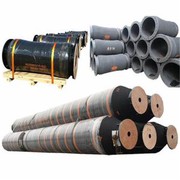
Rubber Dredging Hoses are purpose built to the special requirements of our clients.

Product Description Bearings thousands of roads, rail, and river bridges in all climates in many parts of the world.

Polyurethane is a new type of polymer material, which is a micro-porous elastomer, equivalent to an air spring, with a huge compression ratio and great energy absorption potential.

Arch Rubber Fender SA-A400x2500L
Arch fenders have become increasingly popular in recent years due to the unique features the fender offers.

A team of adept professional with hard-earned experience manufactures the offered range using high grade materials and latest technology.

Integrated opening and closing machine for water conservancy and hydropower
The Integrated open-and-close machine is suitable for modern and landscape-required water conservancy and hydro-power projects and municipal engineering.
One kind of valve used to regulate the flow of fluid via a pipeline is a marine gate valve. It works using a wedge-shaped disc or gate that can be lifted or lowered inside the valve to permit or prohibit fluid flow. Because of this function, marine marine gate valves are especially useful in situations when total shut-off or full, unhindered flow is required.
A threaded stem or a handle resembling a wheel is used to regulate the movement of the gate, which is normally positioned inside the valve parallel to the direction of fluid flow. The gate allows for precise control over the fluid flow rate by creating an opening for the fluid to pass through when it is lifted and blocking the flow when it is lowered. Marine gate valves are used in a variety of industries, including oil and gas, water treatment, and other manufacturing processes, because of their straightforward but efficient design.
The Primary Components of a Marine Gate Valve
The primary function of a marine gate valve is to stop or start the flow of resources through a pipeline. Typically, marine gate valves are either fully open or fully closed when in use. They are ideal for situations which require minimal flow restriction and straight-line flow of fluid and are suitable for high-pressure and temperature applications.
Gate
The gate in a marine gate valve is responsible for providing effective sealing. There are several different types of gate designs to satisfy a multitude of differing applications. Some of the most common types of gates used in marine gate valves are parallel slide gates, slab gates, wedge gates, knife gates, and parallel expanding gates.
Stem
The purpose of the stem in a marine gate valve is to raise or lower the gate. Users can complete this task by spinning the threaded stem manually or controlling it using an actuator. There are two different types of stems depending on the threaded stem end: Rising stem and non-rising stem. When rising stem marine gate valves open, the stem will rise above the handwheel. When non-rising stem marine gate valves open, the stem will not move upwards.
Bonnet
The purpose of the bonnet is to provide coverage for the internal components of a marine gate valve. The bonnet of a marine gate valve contains moving parts and typically attaches to the body of the valve using bolts or screws to form a leak-proof seal. However, you can typically remove it if repairs or maintenance is necessary.
Seat
Seats either come included inside the body of a marine gate valve or in seat ring construction. Integral seats consist of the same material as the valve body. In a seat ring construction, the seats thread into position or press into position before they become seal welded into the valve body. Such construction allows for more variation than integral seats and is ideal for higher temperature applications.
Advantages of Marine Gate Valves
Low flow resistance
When fully open, marine gate valves provide a straight path for fluid, resulting in minimal pressure drop.
Bidirectional flow
These valves can be used in both directions, making them versatile.
Full bore design
The unobstructed bore ensures no turbulence, which is ideal for high-velocity fluids.
Less space
Marine gate valves require relatively less installation space than a ball valve.
Marine gate valves are best used when the minimal amount of pressure loss needs to be applied, as there are no obstructions when it is fully opened and when a free bore is needed. This type of valve is multi-turn, meaning that the operation relies on a threaded stem. The main benefit of this slower operation is a reduction of hydraulic shock caused by fluid changing direction or stopping suddenly.
Marine gate valves can be used in many conditions, including:
● The movement of wastewater or neutral liquids that are between the temperatures of -20 to +70 degrees celsius, with a maximum flow velocity of 5 m/s, and a standard pressure differential of 16 bar units.
● The movement of gases between the temperatures of -20 to +60 degrees celsius, with a maximum flow velocity of 20 m/s and a pressure difference of 16 bar units.
Marine gate valves are essential components in various industries, including plumbing, oil and gas, and manufacturing. They provide a means to control the flow of fluids in pipelines, making them crucial for the smooth operation of many processes. However, like all mechanical devices, marine gate valves can encounter issues that may disrupt their functionality.
Leaking valves
Leaking marine gate valves are a prevalent issue and can lead to significant problems if left unaddressed. The primary cause of leakage is usually a damaged or worn-out valve seat or a damaged gate. To address this issue, valve suppliers recommend inspecting the valve seat and gate for signs of damage or corrosion. If damaged, these components may need to be replaced. Regular maintenance and lubrication can also help prevent leaks.
Stuck valves
Marine gate valves can become stuck in the open or closed position due to rust, debris, or lack of lubrication. When a valve is stuck, it cannot perform its intended function. To resolve this problem, valve manufacturers and valve suppliers suggest first attempting to gently tap the valve body with a rubber mallet to dislodge any debris or rust. If the valve remains stuck, it may require disassembly for a more thorough inspection and potential replacement of damaged parts.
Noisy operation
Unusual noises during valve operation can be indicative of several issues, such as water hammer or vibrations. Water hammer occurs when a sudden change in flow direction creates pressure surges, causing a loud banging noise. To address this, valve supplier soften recommend installing water hammer arrestors or ensuring that the valve is not closing too rapidly. Vibrations can also cause noise and may be resolved by securing the valve and its associated pipes properly.
Corrosion
Corrosion is a common problem, particularly in environments with corrosive substances. Marine gate valves made of materials such as cast iron or steel are susceptible to rust and corrosion. Regular inspection and applying anti-corrosion coatings can help mitigate this issue. Valve suppliers can provide guidance on selecting materials that are more resistant to corrosion, such as stainless steel or bronze.
Difficulty turning the handwheel
If the handwheel is challenging to turn, it could be due to a lack of lubrication or excessive friction within the valve. Valve manufacturers and valve suppliers recommend periodic lubrication of the stem and the threads to ensure smooth operation. If lubrication does not resolve the issue, there may be internal damage or debris that requires attention.
Valve seal problems
In some cases, marine gate valves may not create a proper seal when closed, resulting in unwanted flow. This issue can be caused by wear and tear on the valve seat or gate, misalignment, or foreign particles. Valve suppliers advise inspecting and, if necessary, replacing damaged components to restore the seal.
Marine Gate Valve Maintenance
Proper maintenance of marine gate valves is essential to ensure their longevity and optimal performance. Here are some key maintenance practices to keep in mind:
Regular inspections: Perform regular visual inspections to check for any signs of leaks, corrosion, or damage. Address any issues promptly to prevent further damage or failure.
Lubrication: Apply lubricants to the stem and gate mechanism periodically to ensure smooth operation. Follow the manufacturer's guidelines for the appropriate lubricant and frequency of lubrication.
Operational testing: Regularly operate the marine gate valve to verify its functionality. Open and close the valve fully to ensure smooth movement and proper sealing.
Replacement of seals: Over time, the seals in a marine gate valve may wear out or deteriorate. When necessary, replace the seals to maintain the valve's sealing integrity.
Addressing leakage: If you notice any leakage from the valve, it is crucial to identify the cause and rectify it promptly. This may involve tightening connections, replacing damaged parts, or seeking professional assistance.
Training and documentation: Ensure that personnel responsible for marine gate valve maintenance are adequately trained. Maintain records of maintenance activities, including inspection dates, lubrication records, and any repairs or replacements carried out.
Choosing the right marine gate valve involves considering various factors to ensure it meets the specific requirements of your application. Here are some key criteria to keep in mind:
Fluid type: Consider the nature of the fluid (liquid or gas), its temperature, and whether it contains corrosive or abrasive components. Different materials are suitable for different fluids.
Pressure rating: Marine gate valves come with different pressure ratings. Ensure that the selected valve can handle the maximum pressure in your system.
Size: Marine gate valves are available in various sizes. Select a size that matches your pipeline's diameter.
Material: Marine gate valves are made from a range of materials, including stainless steel, brass, cast iron, and more. The material choice should align with the fluid's properties and the environmental conditions.
End connection type: Marine gate valves can have different end connections, such as flanged, threaded, or welded. Ensure compatibility with your pipeline system.
Operation type: Marine gate valves can be operated manually (handwheel) or automatically (actuated). Choose the appropriate operation type based on your system's needs.
Flow rate and regulation: Determine if your application requires precise flow control or simply on/off functionality.
Our Factory
Shanghai Mountains located in Shanghai, China is a leading manufacturer and supplier of Rubber Fenders for decades years with wide range of most popular products such as Arch Fender, Cone Fender, Cylindrical Fender, Pneumatic Fender, Air bag, Super Cell Fender, Tugboat Rubber Fender.
Our company has three departments, include Factory, Product Research and Development Department and International Trade Department. With about 10 years production and experience and steady development, besides the current products line, We can also design new mould of the new style products for you by the drawing or requirements.


Certificate

FAQ
Hot Tags: marine gate valve, China marine gate valve manufacturers, suppliers, factory, new commodity, long lasting quality merchandise, sought after goods, remarkable merchandise, premium commodity, well-made merchandise



Send Inquiry
