

What is the cost of a rubber fender?
May 09, 2025
As a supplier of rubber fenders, I often encounter inquiries from customers about the cost of rubber fenders. The cost of a rubber fender is not a simple fixed number; it is influenced by a multitude of factors. In this blog, I will delve into the various elements that contribute to the cost of rubber fenders, helping you gain a comprehensive understanding of what goes into pricing these essential marine equipment.
Material Quality
One of the primary factors affecting the cost of a rubber fender is the quality of the rubber material used. High - quality rubber offers better performance in terms of durability, resilience, and resistance to environmental factors such as saltwater, UV rays, and extreme temperatures.
Natural rubber, for example, is known for its excellent elasticity and tear resistance. It can withstand repeated impacts without significant deformation, making it a popular choice for high - end rubber fenders. However, natural rubber is more expensive due to its limited supply and the complex extraction and processing methods.
On the other hand, synthetic rubber, such as styrene - butadiene rubber (SBR) and neoprene, can be more cost - effective. SBR is widely used in rubber fenders because it offers a good balance between performance and cost. It has decent abrasion resistance and can be formulated to meet specific requirements. Neoprene, with its excellent resistance to oil, chemicals, and ozone, is also used in certain applications where these properties are crucial. But it is generally more expensive than SBR.
Design and Type
The design and type of rubber fender also play a significant role in determining its cost. Different types of fenders are designed to meet specific needs and applications in the marine industry.
For instance, the Donut Fender is a popular choice for small boats and docks. Its simple design and relatively small size make it less expensive compared to some of the larger, more complex fenders. Donut fenders are typically made from a single piece of rubber and are easy to install. They provide basic protection against minor impacts.
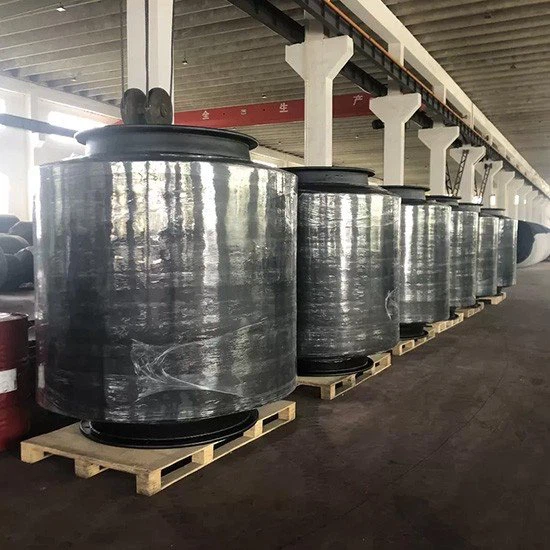
The Super Cell Rubber Fender (SC Type) 1450H is a high - performance fender designed for large vessels and ports. It has a complex cell structure that allows it to absorb a large amount of energy during impact. The manufacturing process of this type of fender is more intricate, involving precise molding and vulcanization processes. As a result, the cost of a Super Cell Rubber Fender (SC Type) 1450H is significantly higher than that of a donut fender.
Another type is the Rubber Corner Fender. These fenders are specifically designed to protect the corners of docks and piers. They often require custom - made molds to fit the specific angle and shape of the corner. The custom - manufacturing process adds to the cost, especially when compared to standard - sized fenders.
Size and Dimensions
The size and dimensions of a rubber fender are directly related to its cost. Larger fenders require more raw materials and more complex manufacturing processes. For example, a large - scale rubber fender used in a commercial port may be several meters in length and width. The amount of rubber needed to produce such a fender is substantial, which drives up the material cost.
In addition, larger fenders often need more advanced machinery and equipment for manufacturing. The molding process for a large fender may require specialized presses and ovens, which increase the production cost. Moreover, transporting large fenders can also be more expensive due to their size and weight.
Manufacturing Process
The manufacturing process of rubber fenders is another important factor influencing the cost. There are several steps involved in making a rubber fender, including mixing the rubber compounds, molding, vulcanization, and finishing.
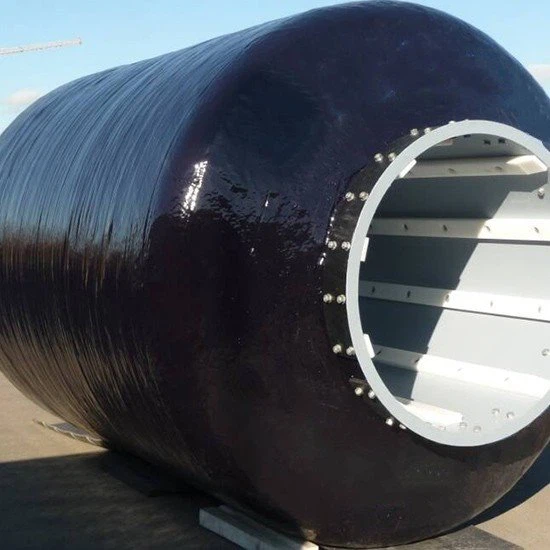
The mixing process is crucial as it determines the properties of the final product. High - quality rubber fenders require precise mixing of different rubber compounds and additives to achieve the desired performance. This may involve using sophisticated mixing equipment and skilled operators, which adds to the cost.
Molding is the process of shaping the rubber into the desired form. For complex - shaped fenders, such as the Super Cell Rubber Fender (SC Type) 1450H, custom - made molds are required. The cost of designing and manufacturing these molds can be quite high, especially for large - scale production.
Vulcanization is a chemical process that cross - links the rubber molecules, giving the fender its strength and durability. The vulcanization process needs to be carefully controlled to ensure the quality of the fender. This may require specialized vulcanization equipment and strict quality control measures, increasing the overall production cost.

Quantity and Order Volume
The quantity of rubber fenders ordered also affects the cost. Generally, the more fenders you order, the lower the unit cost. This is because of economies of scale. When producing a large quantity of fenders, the fixed costs associated with manufacturing, such as the cost of setting up the production line and using the molds, can be spread over a larger number of units.
For example, if you order a small batch of rubber fenders, the cost per unit will be relatively high due to the proportionally higher fixed costs. However, if you place a large - scale order, the production efficiency increases, and the cost per unit decreases.

Market Conditions
Market conditions, such as supply and demand, raw material prices, and competition, also have an impact on the cost of rubber fenders. If the demand for rubber fenders is high and the supply is limited, the prices are likely to increase. Conversely, if there is an oversupply of fenders in the market, prices may be more competitive.
The prices of raw materials, such as rubber, also fluctuate based on global market conditions. For example, if there is a shortage of natural rubber due to bad weather conditions in rubber - producing regions, the price of natural rubber will rise, which in turn will increase the cost of rubber fenders made from natural rubber.
Competition among rubber fender suppliers can also drive down prices. In a highly competitive market, suppliers may offer discounts or better pricing to attract customers. However, it is important to note that extremely low prices may sometimes indicate lower - quality products.
Quality Assurance and Certification
Rubber fenders that meet international quality standards and have relevant certifications are generally more expensive. Certifications such as ISO 9001 (quality management system) and Lloyd's Register certification ensure that the fenders are manufactured under strict quality control processes and meet specific performance requirements.
To obtain these certifications, suppliers need to invest in quality management systems, testing equipment, and personnel training. The cost of obtaining and maintaining these certifications is then reflected in the price of the rubber fenders.
Installation and Maintenance
Although not directly part of the purchase cost, the installation and maintenance requirements of rubber fenders can also have an impact on the overall cost. Some fenders may require specialized installation tools and techniques, which may incur additional costs.
Maintenance costs, such as periodic inspections, cleaning, and replacement of damaged parts, also need to be considered. Fenders that are more durable and require less maintenance in the long run may have a higher upfront cost but can result in lower overall costs over their lifespan.
In conclusion, the cost of a rubber fender is determined by a combination of factors, including material quality, design and type, size and dimensions, manufacturing process, quantity and order volume, market conditions, quality assurance and certification, and installation and maintenance requirements. As a supplier, we strive to offer high - quality rubber fenders at competitive prices.
If you are interested in purchasing rubber fenders for your marine project, we would be more than happy to discuss your specific requirements and provide you with a detailed quote. Contact us to start the procurement negotiation process and find the most suitable rubber fenders for your needs.
References
- "Marine Fender Systems: Design, Testing, and Applications" by John Smith
- "Rubber Technology Handbook" by Karl - Friedrich Gehman
- Industry reports on the rubber fender market published by market research firms.